

Why Hyperpigmentation Keeps Coming Back (And How to Stop It)
Hyperpigmentation can be incredibly frustrating, especially when it seems to fade, only to return again and again.
Many people feel like they are doing everything right: using brightening products, trying natural remedies, and staying consistent with their routine. Yet the dark spots keep reappearing.
The truth is, hyperpigmentation is not just about treating pigment, it’s about understanding what keeps triggering it.
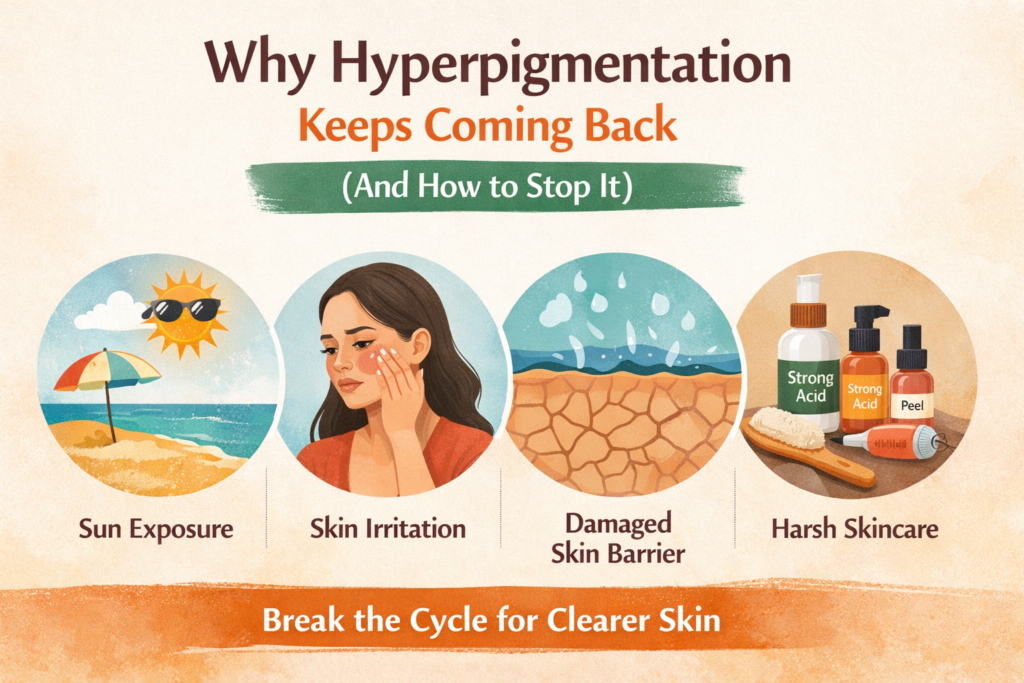
What Causes Hyperpigmentation to Return?
Hyperpigmentation comes back when the skin is repeatedly exposed to the same triggers that caused it in the first place.
The most common ones are:
- Sun exposure
- Skin irritation
- A damaged skin barrier
- Harsh skincare routines
Unless these triggers are addressed, pigmentation can keep coming back even after it fades.
1. Sun Exposure: The Biggest Trigger
UV exposure is the number one cause of hyperpigmentation.
Even a small amount of sun can stimulate melanocytes (pigment-producing cells) to produce more melanin. This can darken existing spots and create new ones.
This is especially important in New Zealand, where UV levels are among the highest in the world.
What to do:
- Use sunscreen daily (preferably mineral-based with zinc oxide)
- Reapply when outdoors
- Wear a hat or seek shade when possible
Without sun protection, it is very difficult to keep pigmentation from returning.
2. Skin Irritation: The Hidden Cause
Many people don’t realise that irritation itself can trigger pigmentation.
When the skin becomes inflamed, it responds by producing more melanin. This is known as post-inflammatory hyperpigmentation.
Common sources of irritation include:
- Strong acids
- Overuse of active ingredients
- Fragrance and essential oils
- DIY treatments like lemon juice
Even products meant to “treat” pigmentation can sometimes make it worse if they irritate the skin.
3. A Damaged Skin Barrier
Your skin barrier is what keeps moisture in and irritants out.
When it becomes damaged, the skin is more sensitive and more likely to react to products and environmental stress. This leads to:
- Increased inflammation
- Slower healing
- Greater risk of pigmentation
Signs of a damaged barrier include:
- dryness
- redness
- stinging or sensitivity
- uneven texture
When the barrier is not healthy, pigmentation is much harder to control.
4. Harsh Skincare Routines
It’s easy to think that stronger products will give faster results but with hyperpigmentation, this often backfires.
Over-exfoliating, layering too many actives, or using aggressive treatments can:
- weaken the skin barrier
- cause chronic irritation
- trigger ongoing pigment production
Harsh skincare routines create a cycle where the skin is constantly trying to recover, and pigmentation keeps returning.
Why a Gentle Approach Works Better
Hyperpigmentation is often a long-term condition, not something that can be fixed overnight.
Instead of forcing the skin to change quickly, a more effective approach is to:
- reduce triggers
- calm inflammation
- support the skin barrier
- protect from UV damage
When the skin is balanced and healthy, it is less likely to produce excess pigment.
A Natural, Skin-Supportive Approach
At Beauty Fields, we focus on gentle, natural ingredients that work with the skin rather than against it.
Instead of harsh treatments, our approach supports the skin by using ingredients such as:
- Parsley – traditionally used for brightening and rich in antioxidants
- Calendula – known for its soothing and calming properties
These ingredients help reduce irritation and support a healthier skin environment, where pigmentation is less likely to return.
How to Stop Hyperpigmentation From Coming Back
To break the cycle, focus on consistency and skin health:
✔ Use daily sun protection
✔ Avoid harsh or irritating treatments
✔ Support your skin barrier with gentle products
✔ Choose calming, natural ingredients
✔ Be patient—lasting results take time
A Smarter Way to Treat Hyperpigmentation
If hyperpigmentation keeps coming back, it’s often a sign that the skin is being pushed too hard or not properly supported.
A gentler, more balanced approach can make a significant difference over time.
If you’re looking for natural skincare designed specifically for hyperpigmentation, explore our range here.
FAQ: Why Hyperpigmentation Keeps Returning
It usually returns because the underlying triggers—such as sun exposure, irritation, or a damaged skin barrier—have not been fully addressed.
Yes. Harsh or irritating products can trigger inflammation, which can lead to increased pigment production.
Focus on sun protection, gentle skincare, and maintaining a healthy skin barrier.
Not usually, but it can be persistent. With the right approach, it can gradually fade and become easier to manage.

Tsahallah is a pharmacist (B.Pharm, University of Jerusalem) and the founder of Beauty Fields NZ, specialising in hyperpigmentation, melasma, and post-inflammatory pigmentation. Her work focuses on safe, long-term, natural skincare solutions supported by education and scientific research.