

Best Hyperpigmentation Treatment in NZ (Evidence-Based Guide)
Hyperpigmentation is one of the most common skin concerns worldwide, causing uneven tone and dark patches on the face and body. It can result from sun exposure, acne, hormonal changes, heredity, and inflammation. Hyperpigmentation is often caused by a combination of factors rather than a single trigger. The most effective treatment not only focuses on fading existing pigment but also on identifying and avoiding the triggers that cause it to worsen or return. This guide explains which hyperpigmentation treatments work best, based on clinical research and dermatology guidelines.
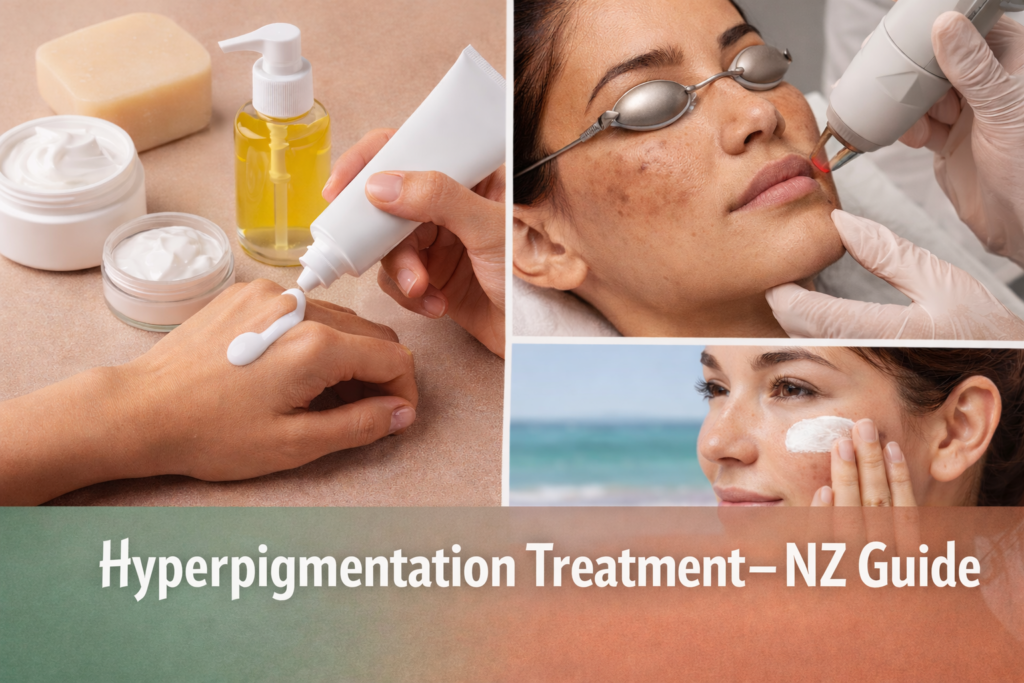
What Is Hyperpigmentation and Why Treatment Depends on the Cause
Hyperpigmentation occurs when the skin produces excess melanin, the pigment responsible for skin colour. This overproduction can be triggered by ultraviolet (UV) radiation, inflammation from acne or injury, hormonal changes such as pregnancy, or certain medications. Treating pigmentation successfully involves both fading existing pigment and preventing its return. This includes daily sun protection and reducing known triggers. For example, melasma related to hormonal contraception may improve when the pill is discontinued, while acne-related pigmentation is more likely to fade when breakouts are treated gently and picking or squeezing is avoided.
How Hyperpigmentation Develops in the Skin
What causes excess melanin production
Melanin is produced by specialised skin cells called melanocytes in response to stimuli such as UV light or inflammation. When melanin production becomes uneven, pigment accumulates in the upper or deeper layers of the skin, creating visible dark patches. Once this process begins, darker areas absorb more UV radiation than surrounding skin — similar to how a black car heats up faster in the sun than a white one. This creates a vicious cycle in which existing pigmentation becomes darker and more difficult to fade. For this reason, sun protection is a top priority in the treatment of hyperpigmentation.
Sun exposure and pigmentation
UV radiation stimulates melanocytes to increase melanin production as a protective response. In high-UV environments like New Zealand, sun exposure is one of the most significant contributors to the development of pigmentation disorders and the recurrence of melasma and dark spots.
In reality, it is almost impossible to completely avoid sun exposure in New Zealand, but your skin will benefit from minimising it as much as possible. Sun exposure does not only occur at the beach — it also happens while driving, walking, jogging, cycling, and even indoors near windows. For this reason, daily sunscreen use is essential. Applying sunscreen every morning is the most important step, and reapplication later in the day is ideal when practical. In real life, consistent once-daily use is often what people manage, and this can still provide significant protection.
If your skin becomes sunburnt, pigmentation treatment should be paused. Sunburn is an inflammatory injury, and treating hyperpigmentation before the inflammation has settled can worsen pigment changes. Instead, focus first on calming the skin using soothing ingredients such as calendula, aloe vera, or zinc oxide. Zinc oxide–based sunscreens are my favourites because they provide physical UV protection while also offering anti-inflammatory benefits, making them useful for both prevention and skin recovery.
Hormonal pigmentation (melasma)
Melasma is strongly associated with oestrogen and progesterone fluctuations during pregnancy or contraceptive use. These hormones and their synthetic versions especially in The pill and menopause HRT, sensitise melanocytes to UV light, making sun exposure a major trigger.
Post-inflammatory hyperpigmentation (acne marks)
Inflammation from acne, eczema, burns, or cosmetic procedures can cause melanocytes in the affected area to overproduce pigment, leaving dark marks after healing. It can also be triggered by bad nutrition, Mosquito bites, and of course, the sun. Almost anything can trigger PIH, and sometimes you will not even know where it came from.
Medical Treatments for Hyperpigmentation
Hydroquinone for Hyperpigmentation
Hydroquinone is considered the gold standard topical treatment for hyperpigmentation. It works by inhibiting tyrosinase, an enzyme essential for melanin synthesis. Clinical trials have shown hydroquinone to be highly effective in the short term for melasma and post-inflammatory pigmentation, sometimes used in combination with retinoids and mild corticosteroids (triple combination therapy).
Long-term use is not recommended due to risks of irritation and rare ochronosis.
Read more about Hydroquinone cream here.
Hydroquinone is classified as a prescription medicine in New Zealand. Products sold without medical authorisation are unregulated and pose a risk of adverse skin reactions
Azelaic Acid as an Alternative to Hydroquinone
Azelaic acid inhibits melanin synthesis and reduces inflammation. It has been shown to be comparable to hydroquinone for melasma in some studies, with fewer side effects. It is also beneficial for acne-prone skin, making it useful for post-inflammatory hyperpigmentation.
Over the counter, no prescription needed in New Zealand.
Sun protection is needed to avoid adverse effects.
In any case of redness, stop using and soothe the skin.
Retinoids and Combination Prescription Creams
Retinoids such as tretinoin increase cell turnover, helping remove pigmented keratinocytes and allowing penetration of other actives. Combination therapies including hydroquinone, tretinoin, and corticosteroids remain among the most popular regimens in dermatology literature.
As always, Sun protection is needed to avoid adverse effects.
In any case of redness, stop using and soothe the skin.
Tranexamic Acid for Melasma and Dark Patches
Tranexamic acid is originally a medicine used to reduce bleeding in certain medical conditions. Skin lightening is a side effect rather than its original purpose. While this effect has led to its use in treating melasma and other pigmentation disorders, it is not without risk. Tranexamic acid can cause systemic side effects, and its use for pigmentation should only be considered under medical supervision. Some clinicians prescribe it because treatment options for stubborn melasma are limited. Personally, I wouldn’t take the risk, definitely not the oral form.
Natural and Non-Prescription Treatments for Hyperpigmentation
Vitamin C for Dark Spots
Vitamin C (ascorbic acid) reduces melanin formation and provides antioxidant protection from UV damage. While it is less potent than prescription agents, it can improve brightness and support other treatments.
Niacinamide and Pigment Transfer Reduction
Niacinamide reduces the transfer of melanosomes from melanocytes to keratinocytes, decreasing visible pigmentation. Studies show it improves uneven tone with regular use and is considered well-tolerated.
It can cause skin irritation, so be cautious.
I tried it, it was like magic at first, but within a week I was red as a tomato:)
Sun protection is essential.
Kojic Acid and Licorice Root Extract
Kojic acid inhibits tyrosinase, while licorice extract (glabridin) reduces melanocyte activity and inflammation. These ingredients are commonly found in brightening creams and soaps.
I never tried this one, but from what I read, irritation may occur; proceed with caution and lots of sunscreen.
Botanical and Herbal Brightening Ingredients
Arbutin, mulberry, bearberry, and green tea extracts have shown pigment-reducing properties in small clinical studies, though results vary depending on formulation and stability. Fading might be very subtle, but still considered a success in a clinical trial.
Professional Treatments for Hyperpigmentation
Procedures mostly:
➡ remove what’s already there
➡ but don’t stop new pigment from forming
➡ Increase inflammation
➡ High risk of rebound effect, especially for darker skin owners. (I mean, anything darker than Donald Trump!)
➡ These treatments are expensive, and you may think you’ll get rid of pigmentation forever. This is not true.
➡ Until now, we played it safe, proceeding with extreme caution
Chemical Peels for Pigmentation
Glycolic acid, salicylic acid, and lactic acid peels accelerate exfoliation and reduce surface pigment. They are most effective when combined with topical treatments.
I do not recommend peelings at all for pigmentation, not even sugar scrubs. I think it irritates the skin and increases inflammation, which is the last thing you want when treating hyperpigmentation.
But
If you insist, and you have severe pigmentation, I recommend my hyperpigmentation products any time. I know I’m biased, but I made these products because I needed them. I made the mistake of deep peeling, Hydroquinone, and many more that I want to save you from going through.
Severe pigmentation is mild pigmentation treated badly.
If you go for it and want to do deep peeling, do it under a dermatologist’s supervision and understand that this is just a jumpstart, you’ll have to preserve the results with extremely strict sun protection andsoothing the skin. After the skin is healed and not red anymore, you can start using my hyperpigmentation cream at night or any of the options above, always paying attention to any redness and calming it.
Laser and Light-Based Treatments
Lasers target melanin directly but must be selected carefully, especially in darker skin tones, as improper settings can worsen pigmentation.
I would only recommend laser for age spots in very white people, like coffee marks on the hands or face, created from sun exposure over the years.
Microneedling for Hyperpigmentation
I tried this, very painful, but it did nothing for my pigmentation or for my skin in general. If you’ve benefited from this, please let me know. I think it’s a hype, not much research either.
Why Beauty Fields’ Hyperpigmentation Treatment Works Best?
Fastest Treatments for Hyperpigmentation
Prescription combination therapy (hydroquinone + retinoid) provides visible results within around 8–12 weeks, when used consistently with sunscreen.
Beauty Fields Natural Hyperpigmentation Skincare – 2 weeks 🟢✔️
Safest Treatments for Sensitive Skin
Azelaic acid, niacinamide, and botanical brighteners are safer for reactive or darker skin types.
Beauty Fields Natural Hyperpigmentation Skincare – No acids, safe to use during summer when you need it the most (With sunscreen). Safe for darker skin.
We are even on this one on safety, with faster results for beauty Fields 🟢✔️
Best Treatment for Melasma
Combination topical therapy plus strict sun protection is the common approach. Oral tranexamic acid may be considered under medical supervision in severe cases.
Beauty Fields Natural Hyperpigmentation Skincare – We see the best results for melasma, naturally, without the side effects.
Let’s call it even 🟢✔️
Best Treatment for Acne-Related Pigmentation
Azelaic acid, niacinamide, and retinoids address both acne and pigmentation simultaneously. Azelaic acid and retinoids address the acne, too.
Beauty Fields Natural Hyperpigmentation Soap – Great for oily skin, Addresses Acne and pigmentation alike.
We’ll call this one even as well 🟢✔️
Best Cost-Effective Hyperpigmentation Treatment (NZ)
Professional in-clinic treatments such as laser therapy, IPL, and deep chemical peels are often very costly, require multiple sessions, downtime, and carry higher risks of irritation or rebound pigmentation, particularly for darker or sensitive skin tones.
Prescription creams (such as hydroquinone-based combinations) are often relatively inexpensive, but usually require a doctor’s visit, strict sun avoidance, limited duration of use, and careful monitoring due to potential side effects.
Beauty Fields Natural Hyperpigmentation Skincare sits in the lower cost range overall, significantly more affordable than laser and deep peels, while more expensive than prescription creams. It offers a practical middle ground: no clinic visits, no downtime, suitable for long-term use, and accessible year-round.
Strong value positioning 🟢✔️ For Beauty Fields.
Final Overall Verdict
Professional treatments like laser, IPL, and deep chemical peels can be effective for stubborn pigmentation, but they come with higher financial cost, potential downtime, and increased risk—especially for melasma and darker skin tones.
Prescription topical treatments remain a proven and budget-friendly medical option, though they often require careful supervision and are not ideal for continuous long-term use.
Beauty Fields Natural Hyperpigmentation Skincare consistently performs well across all categories when weighing results, safety, accessibility, and cost. While not the cheapest option available, it offers a balanced alternative—more affordable than professional procedures, gentler than many prescription treatments, and suitable for ongoing use without interruption.
Overall, it stands out as a reliable, low-risk, and cost-conscious choice for managing hyperpigmentation long term.
Final call?
Beauty Fields delivers the best balance 🟢✔️✨
So check out our natural skin lightening cream and natural skin lightening soap
Why Hyperpigmentation Treatment in NZ Needs Special Care
High UV Levels and Pigmentation Risk
New Zealand experiences some of the highest UV radiation levels globally. UV exposure is a major cause of treatment failure and recurrence.
Why Sunscreen Is Essential for Pigmentation Treatment
Daily sunscreen prevents stimulation of melanocytes and protects treatment progress. Without sun protection, even the strongest treatments will be ineffective.
Clinically Supported Ingredients for Hyperpigmentation
Hydroquinone
Inhibits tyrosinase; most researched depigmenting agent. That comes with adverse effects, be cautious.
Azelaic Acid
Reduces melanin synthesis and inflammation. A safer alternative to hydroquinone.
Niacinamide
Limits pigment transfer between skin cells.
Vitamin C (Ascorbic Acid)
Antioxidant; weak tyrosinase inhibitor.
Kojic Acid
Melanin synthesis inhibitor.
Tranexamic Acid
Reduces UV-induced melanocyte activation. Prescription only for severe cases.
Quick notes to help you decide
- 🌞 Sun protection must always be part of your treatment plan—no matter what option you choose, daily broad-spectrum SPF is essential to prevent new pigmentation and protect progress.
- 🧴 At-home natural products (soap & cream) are safe, gentle, and better for long-term, everyday use with low irritation risk. We recommend our products!
- 💊 Hydroquinone and clinical actives can be very effective but need medical oversight due to side effects and NZ prescription rules.
- 💉 Professional procedures (laser/peels/Cosmelan) often work faster but have higher cost, potential downtime, and require qualified practitioners.
Frequently Asked Questions About Hyperpigmentation Treatment
With a daily use of Beauty Fields products – Around 2 weeks.
Beauty Fields Natural Hyperpigmentation Treatment Skincare will give the fastest results, but one has to remember that maintenance is required and sun protection is a must/
Short-term supervised use is considered safe; long-term continuous use is discouraged.
Beauty Fields skin lightening soap and soaps in general can deliver active ingredients to the deeper layers of the skin. It might be drying, though, so be sure to moisturize if needed.
Yes, especially with sun exposure, hormonal triggers, or inflammation, making maintenance essential.
Conclusion: Best Evidence-Based Treatment for Hyperpigmentation
The most effective approach to treating hyperpigmentation combines:
✔ clinically supported ingredients
✔ strict sun protection
✔ consistent daily routine
✔ professional guidance when needed
Hydroquinone-based therapy remains the most powerful option, though problematic in many ways, while azelaic acid and non-prescription brighteners offer safer long-term maintenance. Beauty Fields offers a natural alternative; we do not have money for clinical trials, but do have great reviews and many happy customers. With patience and proper care, significant improvement is achievable for most skin types.
I would refrain from Laser treatments and deep peels, pigmentation is an ongoing skin condition. The only exception is age spots on very white people.
So, now you have all the knowledge, and you are free to choose what you want for treating your hyperpigmentation. Many of our clients tried anything else before reaching us. You can learn from their mistakes and try us first. Either way, we are always here for you. Reach out anytime!

Tsahallah is a pharmacist (B.Pharm, University of Jerusalem) and the founder of Beauty Fields NZ, specialising in hyperpigmentation, melasma, and post-inflammatory pigmentation. Her work focuses on safe, long-term, natural skincare solutions supported by education and scientific research.