
Parsley & Calendula: A Natural Approach to Hyperpigmentation Treatment
Gently fade, protect, repeat. That’s our philosophy. 🌿 Here’s a summary of the relevant research behind parsley and calendula, the 2 herbs we use in our hyperpigmentation products.
In Short
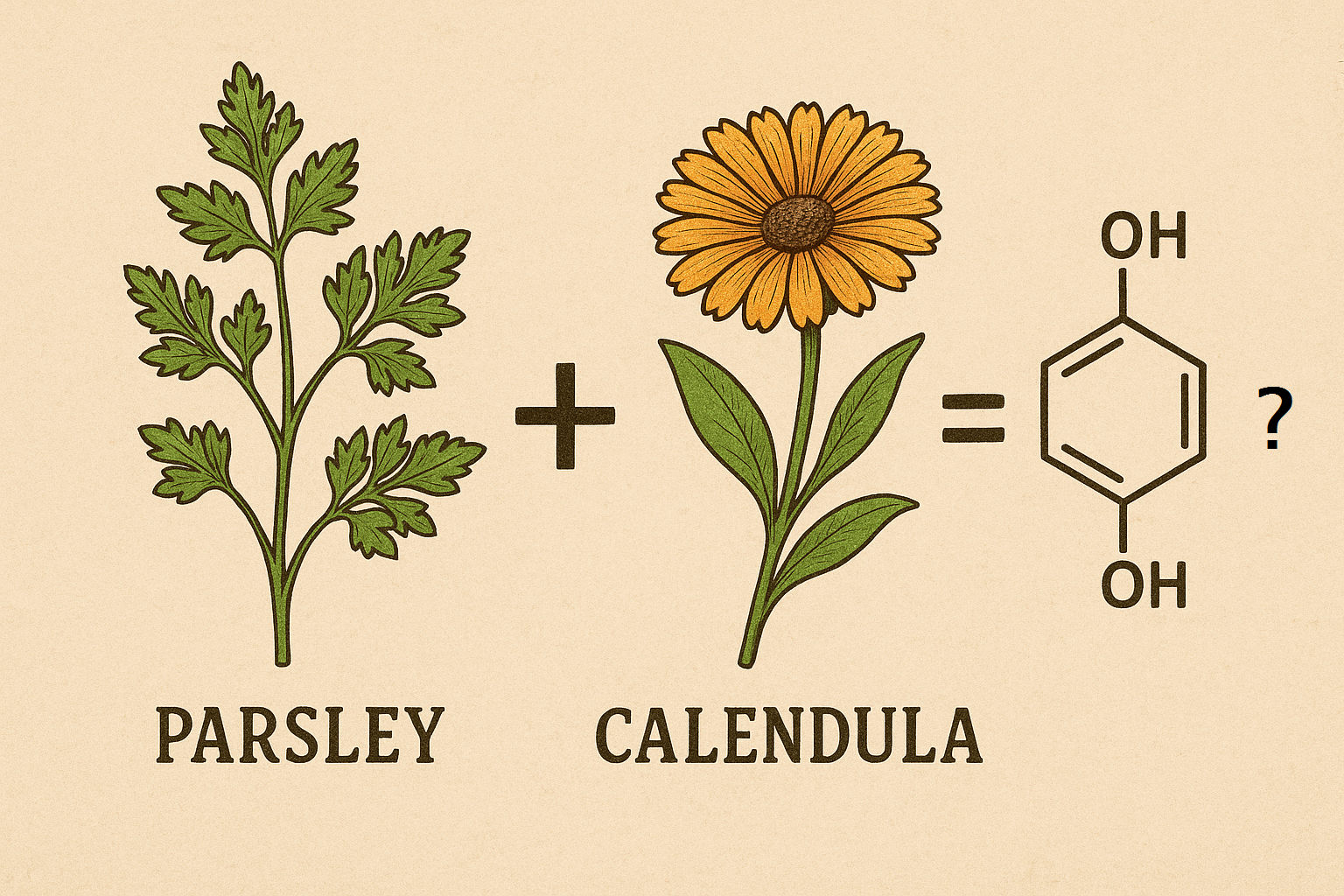
- Parsley: A small randomized trial in epidermal melasma found that topical parsley was approximately as effective as 4% hydroquinone in treating pigmentation on face over 8 weeks. Promising, especially because parsley doesn’t carry the same risks as hydroquinone.
- Calendula: Stronger body of data for anti‑inflammatory, wound‑care, and skin barrier‑soothing effects. While direct melasma-fading research is scarce, its gentle soothing properties can make a significant difference in keeping the skin calm.
- Bottom line: Research is limited but promising. And because our skin lightening products are affordable and gentle, you can try for yourself, and see how YOUR own particular skin responds in just a couple of weeks without risking your health or your wallet.
If you’ve struggled with dark spots or melasma for years, you already know how exhausting hyperpigmentation can be. You try one product after another. It works a little. Then it irritates your skin. Or the pigment comes back.
Hyperpigmentation is frustrating because it’s not just a surface problem. it’s a complex skin condition driven by sun exposure, inflammation, hormones, and how your skin heals itself (National Library of Medicine).
As a pharmacist and formulator, I’ve seen this cycle again and again. Many conventional hyperpigmentation treatments are strong, but strength often comes with a cost: irritation, rebound darkening, and uneven results (Pubmed).
That’s why I became interested in gentler, plant-based approaches that work with the skin instead of against it. Two plants that stand out in emerging research are parsley and calendula.
Why Hyperpigmentation Is So Hard to Treat
Hyperpigmentation happens when pigment cells (melanocytes) produce too much melanin. This usually follows:
• Sun exposure
• Inflammation (acne, irritation, procedures)
• Hormonal changes
• Injury or trauma
Melanin production is controlled by the enzyme tyrosinase, which is activated by oxidative stress and inflammatory signals (International Journal of Molecular Sciences).
This explains why:
✔ Irritation can cause dark marks
✔ Strong treatments can worsen pigmentation
✔ Pigment often returns after stopping treatment
So instead of only trying to “bleach” pigment, a smarter hyperpigmentation treatment strategy is to:
✔ Calm inflammation
✔ Reduce oxidative stress
✔ Support healthy skin healing
✔ Gently regulate melanin production
This is where botanical Parsley and Calendula come to the rescue.
Why Conventional Hyperpigmentation Treatments Often Fail
Common treatments like hydroquinone, retinoids, and chemical peels can reduce pigment but they also increase skin sensitivity and inflammation (cochrane).
For many people, this leads to:
• Burning or redness
• Skin barrier damage
• Post-inflammatory hyperpigmentation
• Aggravation after stopping
Ironically, treatments meant to reduce pigmentation can trigger the very inflammation that creates it (Pubmed).
This is why more researchers are now looking at multi-pathway approaches that target pigmentation while minimizing inflammatory stress (Pubmed).
Parsley: A Natural Ingredient That Targets Excess Pigment
Parsley (Petroselinum crispum) contains biologically active compounds such as:
• Apigenin
• Luteolin
• Vitamin C
• Flavonoids
These compounds have antioxidant and anti-inflammatory effects and may influence melanin production pathways.
How Parsley May Influence Melanin Production
A randomized clinical study comparing topical parsley extract with 4% hydroquinone in women with melasma found no significant difference in pigment reduction after eight weeks (ResearchGate).
This doesn’t mean parsley is a miracle cure.
But it does show something important:
👉 Gentle botanical compounds can affect pigment activity
👉 Harsh chemicals are not the only pathway
👉 Pigment control doesn’t have to mean irritation
Parsley appears to act by:
✔ Reducing oxidative stress
✔ Modulating melanocyte signaling
✔ Supporting pigment regulation
Calendula: Calming Inflammation That Triggers Dark Spots
Calendula (Calendula officinalis) is well known for its effects on:
✔ Wound healing
✔ Reducing redness
✔ Soothing irritated skin
✔ Supporting the skin barrier
Its actions come from flavonoids, carotenoids, and triterpenoids that suppress inflammatory signaling in the skin (SpringerNature).
Why Inflammation Causes Post-Inflammatory Hyperpigmentation
Inflammation stimulates melanocytes and increases melanin transfer to surrounding skin cells — the hallmark of post-inflammatory hyperpigmentation (PIH) (MDPI).
Calendula does not directly block melanin.
Instead, it helps control one of the main triggers of excess pigment: skin inflammation.
By calming the skin, calendula may:
✔ Reduce pigment rebound
✔ Improve tolerance to treatment
✔ Support more even healing
Why Parsley and Calendula Work Better Together
Hyperpigmentation is not caused by one mechanism.
So treating it with one action rarely works.
This botanical combination works on two levels:
Parsley → helps regulate melanin production
Calendula → reduces inflammatory stress
Modern pigment research supports this strategy: addressing pigmentation means targeting melanin synthesis, oxidative stress, and inflammation together (Pubmed).
Together, they support:
✔ More even tone
✔ Less rebound pigmentation
✔ Better long-term tolerance
Is This a Safe Natural Treatment for Hyperpigmentation?
Herbal ingredients do not yet have the same volume of large clinical trials as prescription drugs.
However:
✔ Parsley has early clinical evidence for pigmentation
✔ Calendula is well studied for inflammation and wound healing
✔ Both have long histories of safe topical use
This makes them low-risk, biologically sensible options for long-term pigment support.
In a treatment landscape where many products:
• Irritate
• Thin the skin
• Cause rebound darkening
• Can’t be used continuously
A gentler option that can work without harming the skin — is worth serious consideration.
Needless to say, I know it works for me and for many of my customers.
The Bottom Line on Beauty Fields Natural Hyperpigmentation Treatment
Hyperpigmentation rarely has a simple solution.
Conventional treatments can help, but irritation, relapse, and uneven results leave many people stuck and frustrated.
Parsley and calendula represent a different approach:
Not aggressive bleaching,
But calming and correcting at the same time.
They may offer a gentler and safer alternative for people who struggle with existing hyperpigmentation treatments, working gradually with the skin instead of against it.
FAQs
Will parsley or calendula cure melasma?
Nothing cures melasma permanently. But parsley showed comparable results to 4% hydroquinone in one small trial, and calendula supports comfort and recovery. We combine the two; we already know it works. It’s your turn to find out.
How long until I see changes?
Many of our customers notice visible changes within 2 weeks or less.
Are there risks?
Unlike hydroquinone or strong chemical peels, parsley and calendula are known for their gentleness and lack of harsh side effects.
Our Take
Here’s what we see again and again: so many people with pigmentation spend years chasing complex treatments, harsh chemicals, or expensive procedures—often with more side effects than results. By the time they find us, they’ve wasted not only money but also precious time, energy, and emotional well-being. It shouldn’t be this way. Hyperpigmentation care doesn’t need to be complicated, painful, or crazy expensive.
Our approach is simple: we offer safe, natural, and affordable treatment that you can test on your own skin without fear, without breaking the bank, and without adding to the sorrow of past disappointments. Many of our customers tell us they wish they had tried this first. Don’t wait years – be smart, start gently, and let your skin show you what’s possible.